Why rowing machines get boring
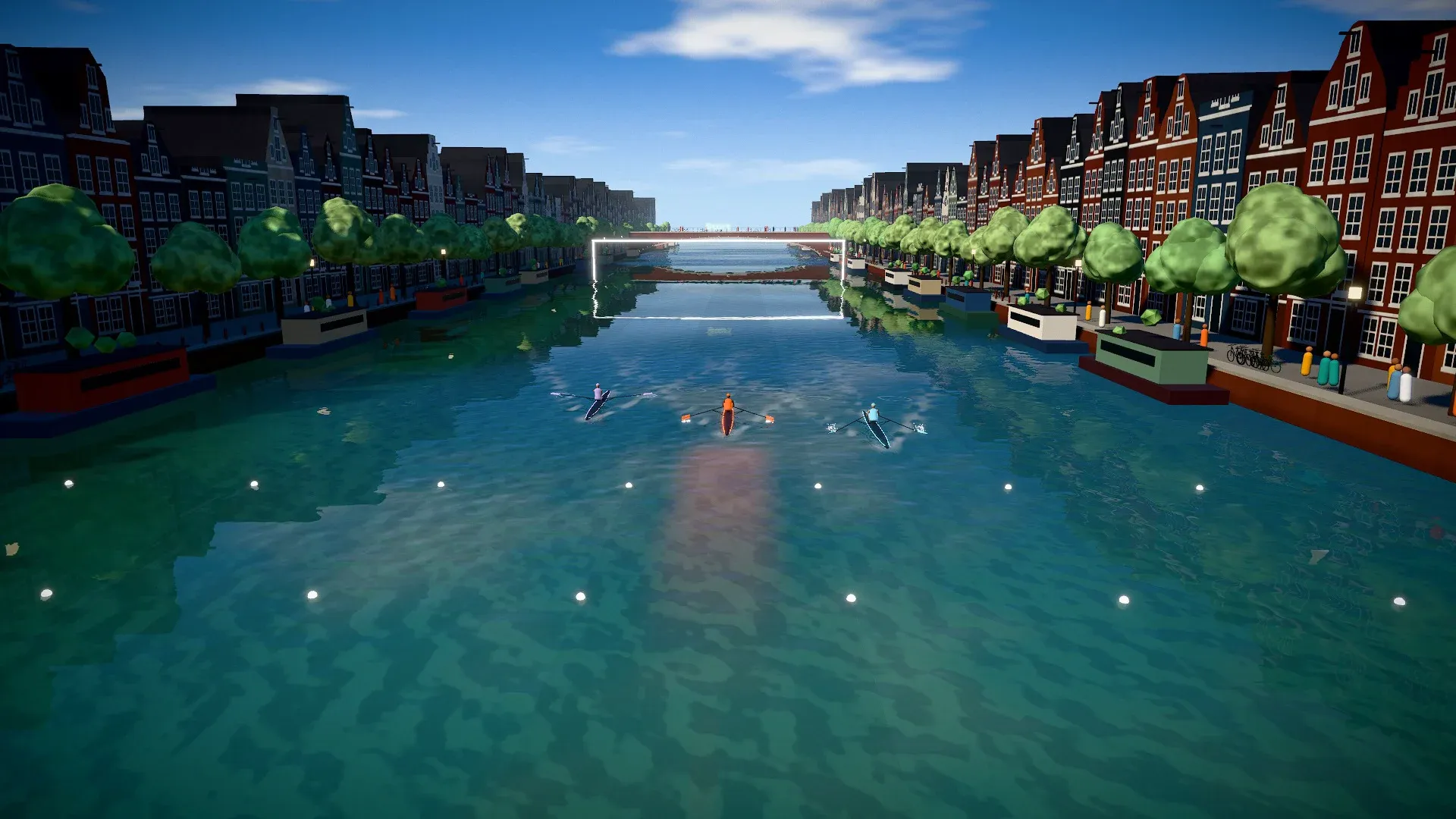
Most rowing machines end up as clothes racks for the same reason: after a few weeks, half an hour on them feels like an hour. That isn’t a lack of discipline. Indoor rowing takes away nearly everything that makes rowing interesting, and leaves you with the hard part.
The good news is that the fixes are small. None of them need new equipment, and most of them cost nothing.
Why it feels so long
Nothing changes in front of you. On the water, the bank moves, the light changes and the boat talks back: balance, wind, the sound of the blades. Indoors, the wall stays exactly where it was.
The stroke is the same every time. That’s the point of a good stroke, and it’s also why your mind wanders off after a few minutes.
The clock is the only story. With nothing else to follow, you watch the time. Watched minutes are slow minutes.
You’re on your own. On the water you row with a crew, or at least past other boats. At home there’s nobody to keep up with and nobody who notices when you stop early.
What helps
Give every row one job
“Row for 30 minutes” is a long, shapeless stretch. “Row 5,000 m” or “hold the same pace for 20 minutes” has a goal you can check on the way. Pick one thing per session: a distance, a pace or a stroke rate. You’ll find yourself thinking about the job instead of the time.
Cut it into pieces
Twenty minutes is long. Four pieces of five minutes, with a minute of easy rowing between them, feel much shorter, even though you row nearly as much. You can do the same with distance: count down 500 m blocks instead of watching the total climb.
Watch your pace, not the clock
The most useful number on a rowing monitor is your pace per 500 m (the “split”). Watching it gives you something to steer: a little more push with the legs, and it drops a second or two. If your monitor lets you, hide the elapsed time altogether.
Change what you see or hear
A podcast or an audiobook works well for long, easy rows, because you want the next part of the story. For harder rows, music helps, especially songs with a steady beat you can row to. Even moving the rower so you face a window instead of a wall makes a difference.
Row with someone, even when you’re alone
Racing is the oldest cure for boredom in rowing. If nobody can row with you, race yourself: row the same distance as last week and try to beat that time, or row against a pacer that holds the pace you’re aiming for. Rowing apps can show your last attempt as a boat beside you, so you see straight away whether you’re ahead or behind. Online challenges, where you count your metres with other rowers over a month, help in the same way.
Shorter, and more often
A 15-minute row you actually do is worth more than a 45-minute row you keep putting off. Short sessions also feel less like a chore, so they’re easier to start. You can always row longer on the days you feel like it.
Make it a game
If you row at home a lot, a screen in front of the rower helps more than anything else on this list. Games and route apps such as RowingBuddy, EXR or Kinomap connect to your rower over Bluetooth and turn every stroke into movement: on a video of a real river, or through a 3D world. RowingBuddy is the one we make. It runs in the browser and puts races against pacers and your own best time on your TV. Whichever you choose, it gives you something to look at and something to row against, and those are exactly the two things a rowing machine is missing.
A simple week to start with
If your rower has been gathering dust, try this for a week or two:
- Day 1: 15 minutes easy, with a podcast. No targets.
- Day 2: 4 × 4 minutes at a steady pace, 1 minute easy in between.
- Day 3: 2,000 m, rowed at a pace you can hold. Note your time: that’s the one to beat next week.
Three short rows, three different jobs, and none of them long enough to get boring.
EXR and Kinomap are trademarks of their owners. RowingBuddy isn’t connected to either.